Why is this a barrier to reform?
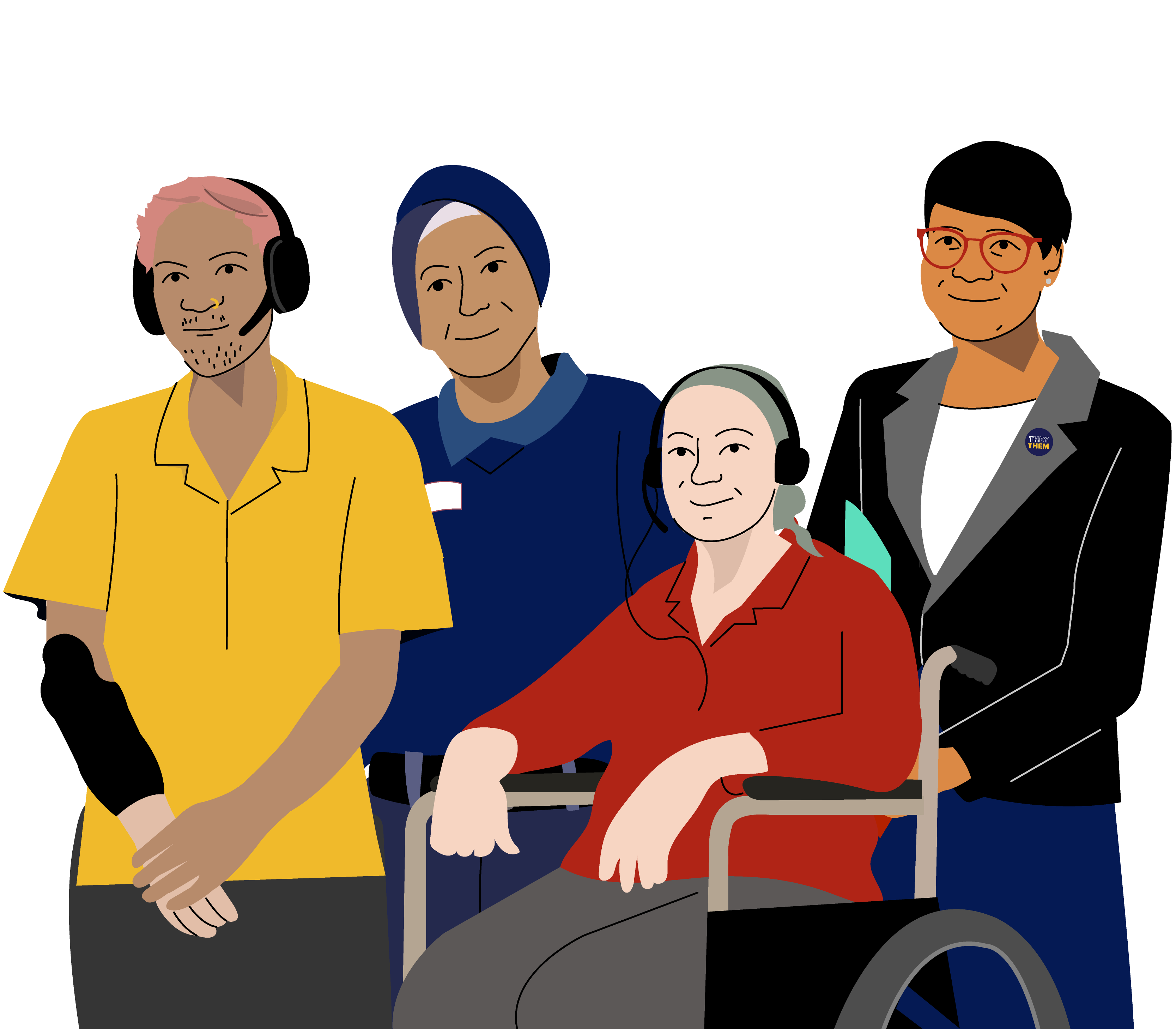
Ambulance Victoria’s current systems and processes – such as rostering, flexibility, complaints and reporting, and reasonable adjustments processes – appear to cater to a particular paramedic archetype identified by the Commission during Phase 1 of the Review. This archetype is a white, non-disabled man described as 'confident and stoic'[47]. Research during Phase 1 demonstrated that people who felt safe and secure working at Ambulance Victoria tended to fit this archetype. During the Progress Evaluation Audit, the Commission heard that staff who do not fit this archetype struggle to be accommodated within Ambulance Victoria’s systems and processes, which has impacted organisational diversity and culture.
Broad organisational commitment to diversity and inclusion is key to building a stronger, more resilient organisation that can effectively serve its community. Intersectionality is crucial in people planning because it recognises that initiatives designed for one community can often have positive impacts on other groups as well. See the Commission’s People and Culture Plan 2024–2026 for an example of intersectionality planning which consolidates the actions from a range of existing plans (Disability Access Plan, Gender Equality Action Plan, Sexual Harassment Plan and Aboriginal Community Engagement Strategy) into one centralised, intersectional plan.
Further information about supporting a diverse workforce through workplace flexibility and creating a more diverse leadership team can be found in Reform Barrier: An inconsistent approach to workplace flexibility and Reform Enabler: Utilising distributed leadership.
47 Susan Furness, Lisa Hanson and Joshua Spier, ‘Archetypal meanings of being a paramedic: A hermeneutic review’ (2021) Australasian Emergency Care 24(2) 135
What are the impacts of this reform barrier for implementing the Review recommendations?
The current paramedic archetype may be a barrier to the implementation of recommendations that require Ambulance Victoria to consider the safety of all staff as reforms require considerations of gender, age and race. These recommendations include:
Recommendations that require Ambulance Victoria to create a culture where all staff are supported to raise complaints and share their experiences may be limited by the narrow paramedic archetype. These include:
The current paramedic archetype may be a barrier to the implementation of recommendations that improve flexibility as it fails to normalise changing and varied workforce needs. These include:
The current paramedic archetype could limit the implementation of recommendations that require workplace equality education and training as it narrows the perceived needs of the workforce and managers. These include:
Select the links above for further information on how this barrier is impacting recommendation implementation.
What are the impacts of this reform barrier for Ambulance Victoria’s workforce?
Ambulance Victoria’s current roster system does not meet or support the needs of many individuals
For example, many regional branches operate under a 10/14 roster or a blended roster, which is difficult for people with caring and parental responsibilities, the majority of whom are women, reinforcing gender stereotypes in Ambulance Victoria. The Commission heard that the current approach to accommodating these needs requires a Flexible Work Arrangement, which has to be applied for annually, creating an additional burden for individuals and their managers.
The rostering system we're using at the moment and the rosters we're using at the moment were largely developed back in the Eighties and Nineties. You know, women stayed at home with their children and the men went to work full time. That's not life anymore. That's not society anymore. And we haven't moved on from those systems.
Participant
Some members of the Ambulance Victoria workforce who reported experiencing racism did not feel supported by current systems to address their concerns
Retaining racially diverse staff at any workplace is critical in bringing diverse perspectives, enhancing cultural competence and improving the organisation's ability to serve diverse communities.
During the Progress Evaluation Audit, several employees discussed having experienced racism, expressing that they did not feel adequately supported to raise these issues within the workplace, resulting in feelings of isolation and alienation. Consequently, many staff members had chosen to leave their positions due to the hostile environment and adverse impacts on mental health and professional wellbeing.
Studies have found common reasons for not reporting racism and race discrimination include a lack of trust in managerial investigation and response, a lack of belief that reporting will amount to change and a view that raising a complaint would negatively impact the complainant’s career.[1] This is especially true for women of colour, who experience disproportionate rates of bullying and harassment in the workplace.
Paramedics are quitting due to the racism that they're experiencing on road from their colleagues and from their team managers.
Participant
Ambulance Victoria’s current processes for reasonable adjustments adversely impact employees with disability
Throughout the Progress Evaluation Audit, the Commission heard that, culturally, disability is not a characteristic that is valued within the organisation. This view is evidenced in the process that requires people with disability to repeatedly demonstrate their need for reasonable adjustments through the same application processes.
The Commission also heard that disability can be a barrier for new employees.
The Equal Opportunity Act 2010 (Vic) requires employers to make reasonable adjustments for employees with disability. Adjusting the process for reasonable adjustment applications to accommodate the ongoing needs of people with disability will improve the process for all.
There's not much tolerance for people who I, I would say, have [a] genuine reasonable adjustment request.
Participant
That's one key concern with disability and AV don't give Flexible Agreements for more than a year. So, if someone's got a disability – we've got people who've got chronic PTSD, who are taking medication that they will be on for the rest of their life that makes them drowsy. And they need to take medication at the same time every night … and they can't work a night shift and every year they’ve got to provide that same evidence over and over again, and that's been very stressful for people.
Participant
The Graduate Ambulance Paramedic recruits in particular, who potentially are unable or not willing or do not feel safe to share their disability but progressing through those twelve months with no workplace adjustments policy with no tools and no support in place, so keeping very silent, experiencing harm, trying to get through that first twelve months … so that first twelve months is a real barrier for a lot of new employees with disability.
Participant
What are the impacts of this reform barrier for Ambulance Victoria’s leadership?
Leaders at Ambulance Victoria have expressed a desire to better support the diverse needs of their teams but report being hampered by organisational structures and processes.
The Commission heard from the Board and Executive that there is work being done to promote and prioritise workplace equality in the organisation’s systems and processes. Ambulance Victoria’s Board could consider including information on the Board’s and the organisation’s work to promote and prioritise workplace equality in the annual reports in line with Recommendation 25: Increasing diversity on the Ambulance Victoria Board.
Ambulance Victoria should also consider communicating the value of diversity and inclusion, and how LGBTIQA+ communities, culturally and racially marginalised communities, and age diversity enrich the workforce. See Reform Enabler: Enhancing communication.
Moreover, leadership at all levels must be adequately resourced and willing to actively champion reforms, and have opportunities to actively listen to the diverse needs of the workforce in order to identify and implement actionable change.
Leaders at Ambulance Victoria feel they are not adequately resourced to oversee and support LGBTIQA+, culturally and racially marginalised, and age-diverse employees.
LGBTIQA+ communities
During the Progress Evaluation Audit, the Commission had reports of varying experiences of LGBTIQA+ staff at Ambulance Victoria. While 76% of survey respondents stated that they did not feel their sexual orientation acted as a barrier to their career advancement, the Commission also heard reports of discrimination from LGBTIQA+ staff linked to their gender identity and sexual orientation.[1]
To address these issues, the Commission heard that leadership had requested internal support through training or awareness-raising materials for LGBTIQA+ inclusion but were declined for funding reasons.
While efforts to promote LGBTIQA+ inclusion, such as the emerging LGBTIQA+ development program, the use of pronoun badges and attendance at Pride events, are acknowledged, managers still said they felt unable to adequately support these communities when there is no policy which includes homophobia or transphobia, or covers how to respond to these issues. Ambulance Victoria should consider providing staff, managers and leaders with effective tools to support LGBTIQA+ colleagues and comply with the Equal Opportunity Act 2010 (Vic).
Culturally and racially marginalised communities
While the work to promote First Peoples reconciliation at Ambulance Victoria is acknowledged, the Commission found that there is a lack of visibility for culturally and racially marginalised staff in the organisation’s policy landscape and the Commission heard from the workforce that there is nothing in existing policies or training on how to identify and respond to instances of racism at Ambulance Victoria.
Ambulance Victoria may wish to include enhancement of racial literacy and understanding of power dynamics within the organisation in manager and leadership training. Implementing robust anti-racism policies that clearly outline the consequences of racism and the responsibilities of bystanders is crucial.
There's that lack of education and understanding, which goes to a broader lack of training for our entire workforce on cultural [issues] and racism.
Participant
I think, in general, the racial literacy in Australia is pretty low and AV is not immune to that.
Participant
Age diversity
Generational issues have consistently been identified as a significant cause of social challenges within Ambulance Victoria. The Commission heard that these challenges include incivility, discrimination and a lack of cohesion among employees of different age groups.
During the Progress Evaluation Audit, the Commission had reports of graduates being left unsupervised in their accommodation and of gendered and generational imbalances in power dynamics creating potential risks of sexual harassment or other unlawful conduct.
See Recommendation 6: Improving safety in isolated environments for more information. These scenarios highlight the complexity of power dynamics, where age intersects significantly with gender.