Recommendation 16 requires Ambulance Victoria to make changes to its complaint policies and procedures to better embed a person-centred approach.

An effective complaint system can empower complainants, deter unlawful behaviour and be a component in modelling leadership on workplace equality and expectations about appropriate and inappropriate workplace behaviour. Person-centred reporting and complaint processes and procedures will promote a safe and supportive environment that allows people to come forward to report their experiences.
A person-centred approach requires listening to the people involved and making changes to improve systems. Robust reporting and complaint procedures and monitoring and evaluation processes that support the identification of key trends, patterns and lessons to understand where changes or action may be necessary will help Ambulance Victoria to comply with the Equal Opportunity Act 2010 (Vic) positive duty.
Note: Following input from the workforce, Ambulance Victoria changed the language it uses from victim-centred to person-centred. The Commission has reflected this change in its reporting.
During Phase 1 of the Review, the Commission observed inconsistent and at times conflicting information across complaint management policies, procedures and supporting documents. The Commission noted that inconsistent or outdated information can affect trust in the report and complaint system.
Members of the workforce who had made formal complaints reported they were unaware of what they could expect of the process and were often not provided with sufficient support. The Commission heard that there were gaps in the information provided to complainants, including the outcome of their report or complaint.
The Commission found very high rates of workforce dissatisfaction with Ambulance Victoria’s process of dealing with formal complaints. Some participants said they felt worse for having made a report or complaint and in some instances were further traumatised.
ParticipantThe handling of that complaint could not have been worse. It not only didn’t deal with the issue but made the conditions worse.
The following table shows which elements of Recommendation 16 were included in Ambulance Victoria’s Complaints Policy at the time of the Progress Evaluation Audit. The Commission found that some of the elements required by Recommendation 16 were not contained in the Complaints Policy but outlined in other documents on Ambulance Victoria’s intranet. For example, a document entitled ‘We have received your complaint’ outlined what complainants should expect after they lodged a complaint with the Professional Standards and Behaviours Department (PSBD), including steps that would be taken to maintain confidentiality, available support services and the range of response pathways that were in place.
Elements of Recommendation 16 | Contained in the policy? |
|---|---|
a) A comprehensive list of how, where and to whom a complaint can be made, including the available internal and external reporting options | No |
b) Information about the availability and role of support services | No |
c) The multiple options available to resolve a report or complaint, from informal resolutions through to formal reports and complaints | No |
d) How a complaint will be managed, the steps involved, the roles and responsibilities of key staff and service standards that clearly set out what to expect | No |
e) The range of outcomes that may be achieved | Yes |
f) Guidance about when a complaint will be immediately escalated to a formal complaint process or referred to an external agency such as Victoria Police | No |
g) Guidance on when internal and external investigators may be appropriate, including for complaints about senior staff members | No |
h) How information will be recorded or taken and the confidentiality safeguards in place | Yes |
i) Information about victimisation, including a clear statement that it is unlawful | No |
k) How the performance of the report and complaint system will be monitored | No |
The Commission found that the workforce has a good level of awareness of available complaint pathways and the different options available to make a complaint.
Higher rates of awareness, understanding and confidence were found among first responders, non-operational and operational support, managerial staff and those people who had participated in the Leading Together program.
However, the Commission found that there is further opportunity to build the workforce’s understanding of how complaints are managed at Ambulance Victoria. For example, less than half of survey respondents agreed that they understood the different complaint options available to them (47%) and that complaint policies and procedures provided clear guidance (46%).
Consideration of the Reform Enabler: Enhancing communication should include a focus on PSBD policies and procedures as well as options available to staff to make a complaint.
Recommendation 16 is part of a group of complaint-related recommendations aimed at improving the effectiveness of Ambulance Victoria’s reporting and complaint system, including embedding person-centred and trauma-informed approaches across the complaint-management process.*
The Commission found that person-centred and trauma-informed practice principles have been considered throughout the PSBD complaint workflow and the responsibilities of team members. The PSBD’s Operating Manual Draft Version 0.4 (a living document), for example, outlines steps to be taken by case managers that are aligned with person-centred practice.
However, the Commission also found that of the survey respondents who had made complaints to the PSBD since 5 June 2023, most tended not to agree that their complaint had been handled in a fair, trauma-informed or person-centred way.[27]
On the measures above, operational staff including ambulance paramedics with less than 12 months experience (AP12s), Advanced Life Support (ALS) paramedics and Mobile Intensive Care Ambulance (MICA)/MICA flight paramedics had lower rates of agreement than overall, while non-operational and operational support and managerial staff reported higher rates of agreement.
The Commission also asked respondents to complaints for their feedback. Among this cohort, there were very high levels of dissatisfaction with timeliness, fairness, support and communication – elements that speak to issues of natural justice not being perceived or experienced as well as they could be.
*See Recommendation 13: A victim-centred and fair report and complaint system, Recommendation 14: Enhancing perceptions of independence and supporting capability for the new organisational response to reports and complaints of unlawful conduct, Recommendation 15: Supporting staff to confidently report through anonymous pathways, Recommendation 18: Developing resources to support accessibility of the report and complaint system and Recommendation 23: Supporting the effective delivery of reporting and complaint reforms.
[27] Note that percentages may not add up to 100% for each question as neutral responses are not shown.
Trust was lower among some operational workforce members (ALS paramedics, MICA interns, MICA/MICA flight paramedics) but higher among first responders, operational support and managerial staff, and non-operational staff.
In the Phase 1 Report, the right of review is described as a feature of effective complaint-handling systems (see section 7.1.3, figure 7C of the Phase 1 Report). During the Commission’s Phase 3 data collection, members of the workforce expressed concern that there were no options for review if a person was dissatisfied with the outcome of a complaint. Workforce members also expressed concern that if a PSBD staff member was the subject of a complaint, there was no process to manage this conflict of interest.
During the Progress Evaluation Audit, senior leaders at Ambulance Victoria advised the Commission that complainants and respondents can follow Ambulance Victoria’s Grievance Procedure (PRO/PAC/001) to raise a complaint or concern about the PSBD process. This is not clearly spelled out in the Complaints Policy and, based on workforce feedback, awareness of this avenue is not widespread. The Complaints Policy was also recently amended to formally document that where there is a conflict of interest in the PSBD handling complaints, complaints should be directed to the executive director People and Culture or the CEO and/or general counsel.
During Phase 1 of the Review, the Commission found that a significant proportion of people who had made formal complaints indicated that they had experienced victimisation or negative career consequences.
Recommendation 16 identifies the need for the Complaints Policy to contain information about victimisation, including a clear statement that it is unlawful. See section 4.3.4 of the Phase 1 Report.
In the workforce survey conducted in June 2024, of the 144 people who responded to the question ‘Did you experience any unfavourable treatment (victimisation) at work as a result of your complaint to PSBD?’, 42% responded yes.[30]
[30] 32% responded no (n=46), 21% were unsure (n=30) and 6% preferred not to respond (n=8). Percentage totals greater than 100 due to rounding.

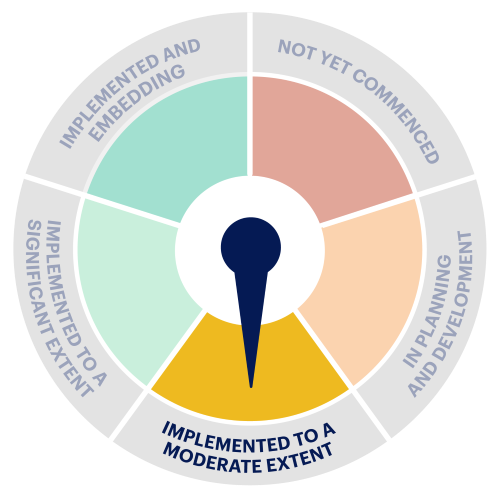
The Commission has assessed this recommendation as implemented to a moderate extent as there is still work to do, via both policy and practice, to strengthen and continue to rebuild the workforce’s trust and confidence in Ambulance Victoria’s report and complaint system.
In particular, work should focus on improving workforce experiences of the reporting and complaint system, building trust in the system and addressing the continuing experiences of victimisation within the workforce.
The further measures needed in relation to complaints recommendations should be considered both individually and together as they are interconnected and synergistic. Reform work cannot only focus on the establishment of updated policies and processes. It must be combined with awareness raising and promotion of services. See Reform Barrier: A rigid structural environment.
At the time of the Progress Evaluation Audit, the PSBD had been in operation for one year. A significant amount of work had gone into establishing this new department and it would not be considered unusual that implementation difficulties and challenges had arisen. Given the significant distrust and dissatisfaction with the previous complaint-management processes, it would be reasonable to expect that it will take time and effort to rebuild workforce trust. In service of this goal, further work is required to embed person-centred, trauma-informed practice in the work of the PSBD and complaint management more broadly.
This should include updating policies to clearly communicate to the workforce what they can expect from each part of the complaint process (for example, Recommendation 16). Aligning this work with the Reform Enabler: Enhancing communication would help to increase staff awareness and buy-in, which in turn should support harnessing the Reform Enabler: Harnessing workforce commitment.
The more challenging aspect, and the one that is key to rebuilding the trust and confidence of the workforce, is to ensure that what is documented in policy is consistently found in practice.