Recommendation 19 requires Ambulance Victoria to regularly publish de-identified case studies and performance information to educate employees on acceptable behaviour and to demonstrate the effectiveness of the new complaint system.

Supporting transparency and developing learning tools align with leading practice and minimum standards for report and complaint handling, and will help Ambulance Victoria to eliminate or reduce the risk of workplace harm through behavioural change. This communicates to the organisation that action is being taken to build confidence in the system.
Regularly publishing de-identified case studies and performance data will improve understanding of what unlawful and harmful conduct looks like and set the standard for acceptable behaviour.
The Phase 1 Report highlighted a significant gap in Ambulance Victoria’s use of transparent learning tools. The Commission found that Ambulance Victoria did not consistently inform its workforce about the outcomes of complaints and disciplinary actions.
This lack of transparency can lead to a disconnect between management and employees, potentially undermining trust and accountability.
By not sharing this information, employees may remain unaware of the consequences of unlawful or harmful behaviour, which can hinder efforts to foster a culture of accountability and continuous improvement.
During the Progress Evaluation Audit, Ambulance Victoria informed the Commission that case studies had not been created or published to the workforce because maintaining confidentiality for all parties in a complaint made de-identifying case studies difficult. In the absence of case studies, an AI-generated information video was disseminated to the workforce and was considered by Ambulance Victoria to have been a successful alternative. However, in October 2024 Ambulance Victoria said it had commenced publishing de-identified case studies in its Workforce Report, aligned to its evidence-based prevention focus.
Ambulance Victoria has not yet established benchmarks and is therefore unable to assess the performance of the complaint service against these agreed standards. See Recommendation 20: Understanding how the report and complaint system is working for detail on the progress of the benchmarks.

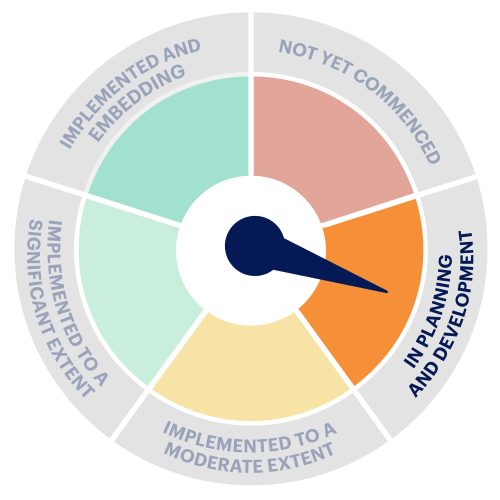
The Commission has assessed Ambulance Victoria’s progress towards implementing this recommendation as in planning or development, given the findings that limited case studies and no benchmarks had been developed at the time of the Progress Evaluation Audit.
Case studies and performance information to educate employees on acceptable behaviour and to demonstrate the effectiveness of the new complaint system will promote transparency and encourage workforce buy-in of complaint reforms as part of Reform Enabler: Enhancing Communication. This communication will educate all employees and first responders on acceptable standards of behaviour, promoting a Reform Enabler: Building a culture of prevention.
Using learning tools to reduce vexatious and low-level complaints
To manage PSBD resourcing, Ambulance Victoria must manage the number of vexatious matters and low-level incivility matters received. Case studies and other learning resources can be a useful tool in educating complainants about inappropriate complaints.